
Scribando Book Showcase
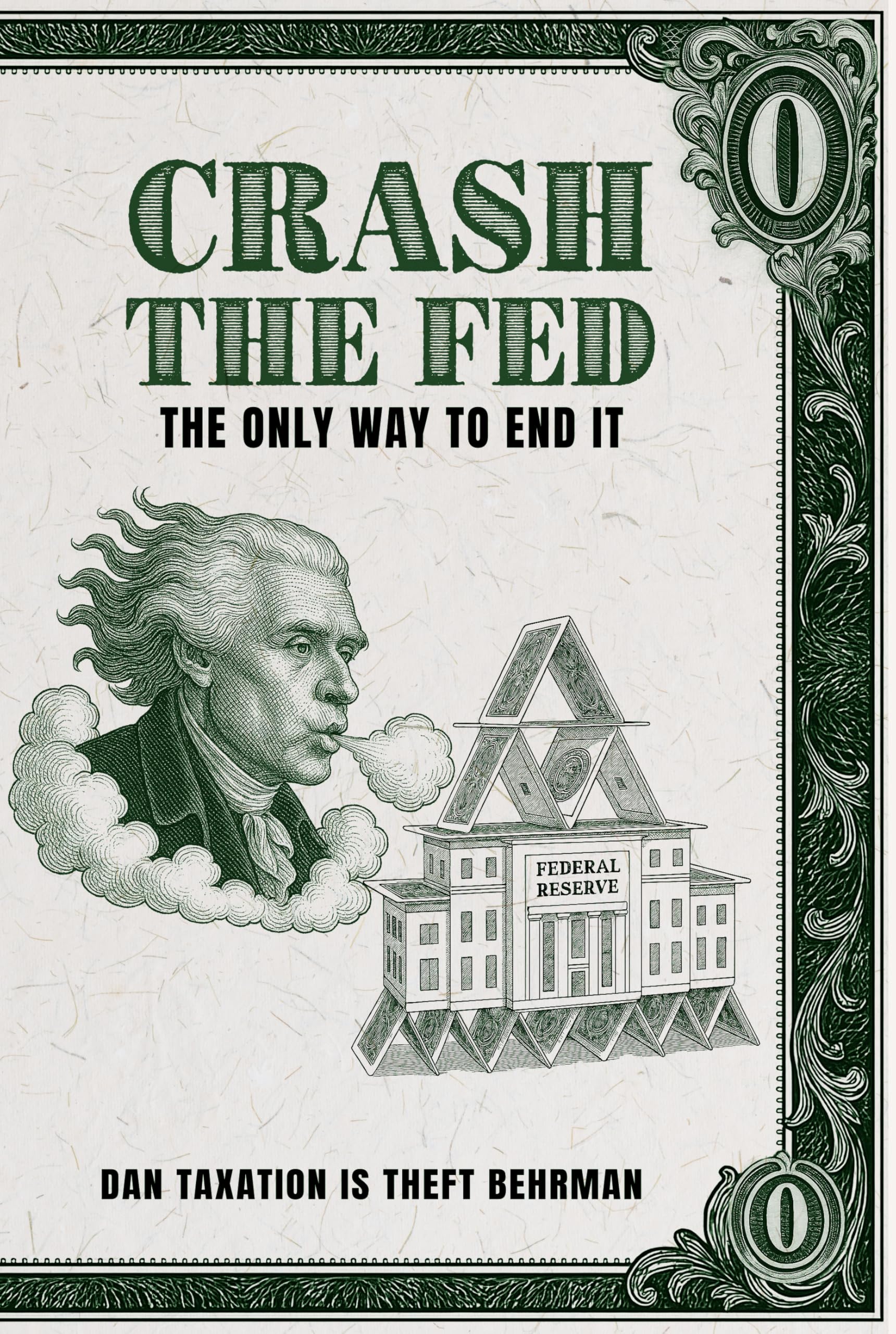
Crash The Fed: The Only Way To End It
- Author
- Dan Taxation Is Theft Behrman
- ISBN
- B0G3Y9D1DH
- Available at
- Amazon
About this book
How to Starve the Beast and Reclaim Your FreedomMost people believe they need money to survive.
They believe money comes from the government.
So they believe they need government to survive.
That lie is what keeps you working, paying, and obeying.
Crash the Fed exposes how this illusion was built—and how easily it can be dismantled. When a private banking cartel can print money at will, the only way to take away its power is to stop giving that money value. You don’t need politicians to “end the Fed.” You don’t need another election. You just need to understand how their system works—and how to walk away from it.
In this powerful follow-up to Ron Paul’s End the Fed, author Dan Taxation Is Theft Behrman lays out the next step: practical actions ordinary people can take to drain the system peacefully. When the Fed’s fiat loses value because we refuse to depend on it, the monster shrivels into the limited government it was supposed to be.
Inside you’ll discover:
Why the Fed was never about stability—it was about controlHow taxation and inflation are two sides of the same theftWhy “money” doesn’t come from government—it comes from usReal-world examples of communities already escaping the fiat systemSimple, peaceful strategies to opt out and build alternativesThis isn’t just another critique of central banking.
It’s a blueprint for freedom.
More about this book
Crash The Fed: The Only Way To End It delivers a punchy, contrarian case for freedom in an era of expanding financial control. With direct language and clear through-lines, it frames big economic questions in a way that feels urgent, accessible, and hard to ignore.
Perfect for readers who gravitate toward debates on monetary policy, central banking, and the real-world consequences of currency management. It sits comfortably beside other provocative economic polemics that challenge mainstream assumptions.
Books in this political-economy lane translate complex financial systems into arguments about power, incentives, and accountability. The best titles connect monetary institutions to everyday outcomes—prices, savings, debt, and the scope of government—making abstract policy feel personal and immediate.